BOOK 10
The Ritual
by Grainne Grace Duffy (Author) Format: Hardco
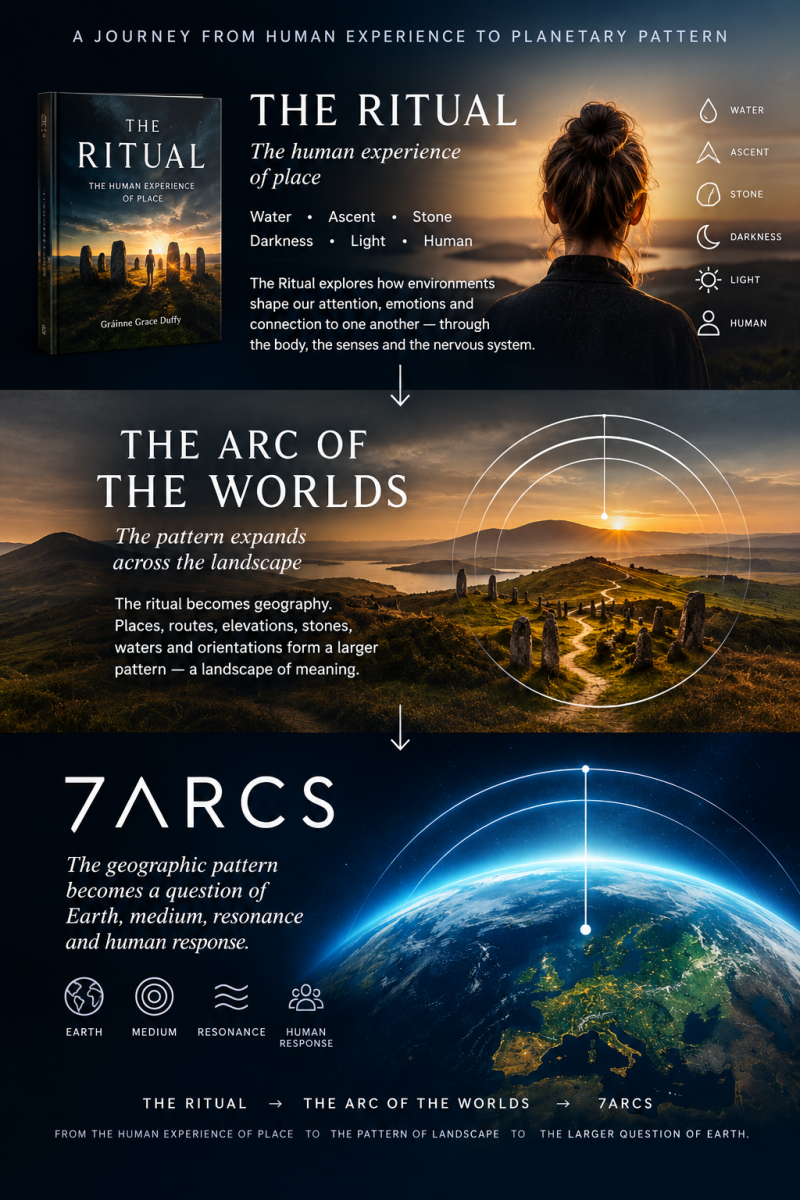
The ancient sensory system was never lost. It still lives quietly in the places where people gather — in the hush before a performance, the rise of a crowd, the glow of a single light in a darkened room.
Beneath the symbols lies a simple human mechanism: the nervous system responding to movement, elevation, sound, shadow, brightness, and the presence of others.
The Ritual traces the architecture of that experience. Through a sequence of elemental stages — water, ascent, stone, darkness, light — it reveals how environments shape our attention, our emotions, and our connection to one another.
This system is neutral. It can open us, steady us, unite us — or it can be used to steer feeling and focus. The question is not whether the mechanism exists. The question is how we choose to use it.
A meditation on human perception, collective experience, and the subtle choreography of space, The Ritual invites readers to look beneath the surface of the moments that move us.
Book 9
BOOK 8
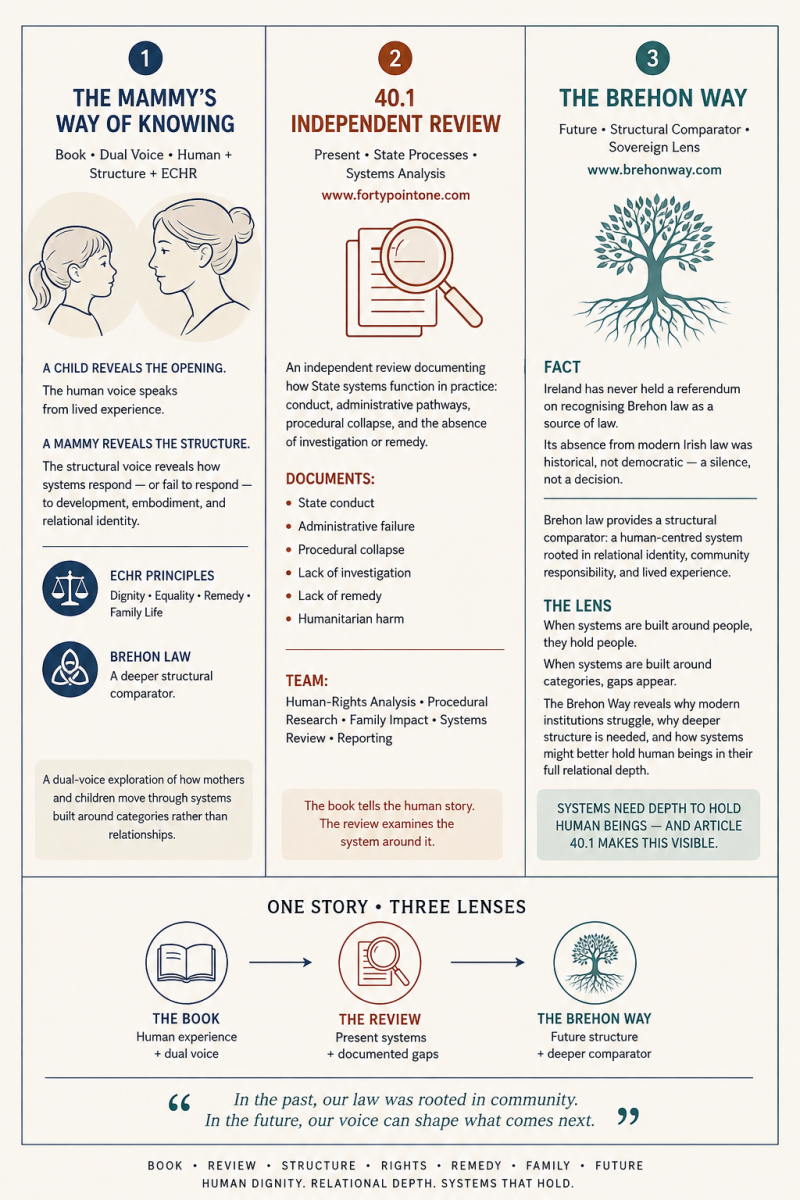
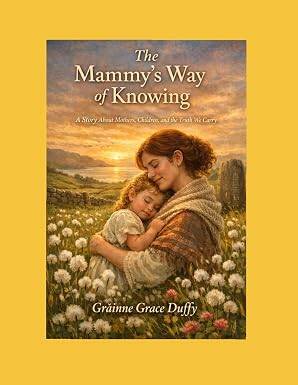
The Mammy’s Way of Knowing: A story about mothers, children, and the truth we carry.
by Grainne Grace Duffy (Author) Format: Paperback
The Mammy’s Way of Knowing explores why modern systems often struggle to hold mothers and children — not through fault, but through the architecture they rely on. Built on contract logic, fixed identity, and procedural pathways, today’s institutions can organise categories and timelines, yet frequently miss the depth of a human being. A child makes this mismatch visible simply by being who they are.Moving between lived experience and structural interpretation, the book reveals the human architecture that mothers instinctively navigate: fascia, development, ecology, relationship, and embodied communication. Where modern frameworks simplify, relational identity restores depth. Where systems misread, a mammy understands.Drawing on Ireland’s historical human‑centred architecture, Brehon law appears here as a structural comparator — not as nostalgia, but as a lens that helps illuminate what modern systems cannot easily see. In doing so, the book offers mothers a map they were never given: a way to understand why their instincts feel out of step with institutional logic, and why their children reveal structural gaps simply by being human.A child reveals the opening. A mammy reveals the structure. Together, they show what modern systems have difficulty holding.
